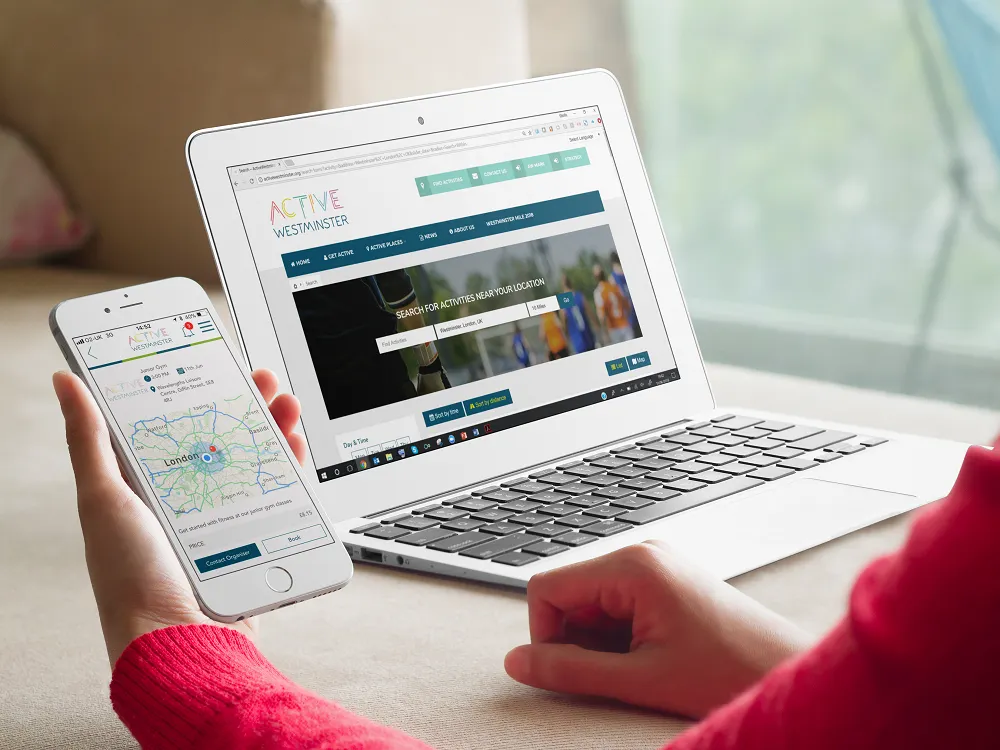
We share insights from Westminster and Manchester City Councils about how the OpenActive initiative makes it easier to get people active in their area.
Being active is not only vital for individual health and wellbeing. It also helps to strengthen communities and revitalise local areas. Every £1 spent on community sport and physical activity generates nearly £4 for the economy and society across England.
Many local authorities are looking for ways to help their residents to be more active. Earlier this year, we hosted a webinar exploring how data and digital can help.
Eugene Minogue, Head of Physical Activity, Leisure & Sport (PALS) at Westminster City Council, and Anne Marie Errock, Digital Lead for MCRActive at Manchester City Council, shared their experiences leading digital transformation projects for their respective councils.
Below, we’ve summarised their insights about their journey so far, or you can watch the full recording here.
Making it easier for people to get active, and more
Information about where, when and what activities take place is scattered across the web, from community Facebook pages to individual gym’s websites. Some activity providers don’t have an online presence at all. It’s hard for a person to find out all the information they need to participate. Even when they do find the information, in some areas, they have to create different memberships for each activity, even when it’s provided by the same council. In fact, people find it twice as easy to order a takeaway as they do to find and book an activity online.
Westminster and Manchester City Councils are building platforms, powered by open opportunity data, to make it easy for residents to find, book and (soon) pay for activities. Both these platforms form part of each council’s wider digital transformation strategies. They not only bring together data from across the sector, but also help break down data silos within each council.
For Westminster City Council, they’re offering residents a ‘MyWestminster’ account — one account to access all services, from council tax to swimming pools. The Physical Activity, Leisure and Sport service have also collaborated internally with the Family Information Service to combine open datasets of activities.
Manchester City Council are working with health providers to ensure their platform meets the needs of frontline practitioners, to help support social prescribing. While their current focus is on sports and physical activity, they’re also in discussions with libraries and cultural institutions as part of future plans.
Getting support and buy-in from stakeholders
To launch your own digital project to help people to get active, you need to be ready to invest time in getting support and buy-in from internal and external stakeholders. Developing strong storytelling, which ties your idea to the strategic view of the council and other digital programmes, is crucial.
Internally, getting open data included as part of your council’s strategy can help provide the necessary incentives when talking to other teams.
Externally, including OpenActive requirements in leisure contracts, community use agreements and other funding agreements helps mobilise activity providers to start sharing data about their activities.
Responding to change
When the pandemic hit in 2020, ActiveWestminster were able to respond quickly. They worked with partners including imin, Playwaze and Everyone Active to pivot to providing online content. Over the period of April 2020 — February 2020, the activity finder continued to receive thousands of searches each month. As the information on the activity finder was published to the OpenActive data standards, it could be easily featured on other products. Sport England’s ‘Join the Movement’ campaign was one product that featured the activities, and they received over 100,000 searches from people looking for ways to get and stay active during lockdown.
MCRActive is due to go live this summer, and is already attracting interest from other local authorities across the country. “This is the direction of travel for the majority of local authorities,” explained Anne Marie. “We’re seeing more and more councils reach out to us to find out more about what we’re doing. Leisure operators need to understand this and that more of their customers will be asking for this change in the long run. So to future-proof, get the hard work done now.”
Ensuring quality
Unlike perhaps the take-away or holiday sector, local authorities have additional considerations around safeguarding and duty of care to their residents. To help ensure they’re signposting to high quality activities, both Westminster and Manchester invest time in ensuring data quality. They each have a council-specific ‘mark’ for activities that indicates to consumers that they can expect a certain level of service — the MCRActive Mark and the ActiveWestminster Mark.
Want to find out more?
- Watch the webinar in full
- View guidance for adding OpenActive requirements as part of leisure or facility management contracts
Or if you’d like to speak to one of the team, contact: [email protected]
